
Enshortification and the death of (social?) media

I remain befuddled about the current state of SEO and the shift to GEO.
For those of you blissfully unaware, SEO stands for Search Engine Optimization, or the way Google (and other search engines) force people to write to ensure they show up high in a search result. Or at least it was that way five years ago.
GEO is replacing SEO, it stands for Generative Engine Optimization and is essentially the way you have to write to ensure that your work will be read by an AI and then summarized back to its searchers on Google (or some other search engines). (No need to visit the source, my friend.)
It’s basically the slop, devil-baby of SEO and GEN AI.
According to a study by the Pew Research Center released last year, when a search result includes AI summaries, the percentage of people who will click through to a source drops from 15 percent to 8 percent.
BUT, and it’s a big one, only 1 percent of people who use an AI summary will click on one of its links.
One percent.
Now this is the part I’m confused about.
The whole concept of SEO was to get better rankings for your site or your article in Google’s search results to help drive more traffic your way.
But it seems that the whole point of GEO is to ensure your work is being used for an AI summary, which ultimately DOESN’T drive traffic.
So why bother?
This feels like the end of something that, even at its height, wasn’t exactly fair, but at least helped at times.
Back when SEO was king, there was a sort of unspoken trust.
We wrote the articles and allowed Google to crawl those articles so the company could then create a useful service that would catalog everyone’s work and allow people to find it. Thus increasing traffic.
Google didn’t pay us (or most of us) for access. But we were OK with that, because they were simply creating a massive catalog in which people could search for things that they wanted to research or read. And then go to that source to dig deeper into the topic or story.
But now, we’re being asked to create content that is being used to feed Google’s Gen AI, which, in turn, takes our hard work and turns it into, hopefully, mostly very brief, often contextless, summarized answers. Those answers are given a bit more heft because they’re not just some chatbot spouting off ideas; they’re a chatbot taking the hard work of a human and stripping it down to its soulless, shortened summary. And people often trust the answer because the chatbot then points to the link and says, “Hey, I didn’t make it up, so and so(AP, New York Times, Game Informer, CNN) did a ton of work, so you can trust me. But no need to go read the article, this is all you need to know.”
So now, we do the work, Google bots scrape the words, and we get nothing in return. Google no longer wants to help people find things; it wants to be a flytrap. It doesn’t want you to ever leave.
Social Media is doing the same sort of thing. These sites are making it increasingly difficult to leave or, more specifically, it encourages readers to stay on their site. Some don’t allow links off their site, others treat them in a way that lessens the likelihood people will click through.
Instead, they want people to consume, to stay, to “engage.” So they push for shorter, for less context, for fewer routes leading away from their sites.
They encourage this enshortification (with apologies to Cory) to help create tiny little ouroboros of context-free facts, entertainment, emotions, and engagement.
You’ve probably heard that word before, a lot if you work in media. Engagement. What’s it mean? Why should I care? How does it affect me as a writer or someone who runs a site?
It’s essentially the way social media tricked everyone into no longer tracking click-throughs. Click-throughs, or clicks on a link from, say, Twitter, to your website, are meaningful. They have a direct impact on your income and audience. But engagement. Engagement means clicking on things inside Twitter, for instance. Engagement helps Twitter, not necessarily you. You can have hundreds of thousands of engagements on a post, but four clicks to your site.
Stop caring about engagement. Despite what your social media managers and experts, and nearly everyone looking to make a buck on LinkedIn, tell you. Engagement is good for social media companies, not media companies, not when it’s happening somewhere else.
There is a counterargument, one I don’t think is meaningful. The counter-argument is that engagement can reflect on how well you’re building your brand. But here’s the thing: brand building is happening in an increasingly escape-proof vacuum. Who cares if PadandPixel is HUGE on Twitter if no one ever leaves Twitter to interact with my writing?
Brand building only helps if it’s to a group of people who show a willingness to, to borrow a phrase, engage with that brand in a meaningful way.
I just don’t buy the argument.
So why should I care if Google’s AI is well fed or Twitter’s engagement is high, if I get nothing back from the deal?
What’s the solution?
Currently, I think brands and media need to focus on building up their own safe haven for consumers, readers, and fans away from social media and the like. Own your community and treat it well, because if you lose it to social media or Google, it may be forever.
Elsewhere

How 007 First Light brought its characters to life
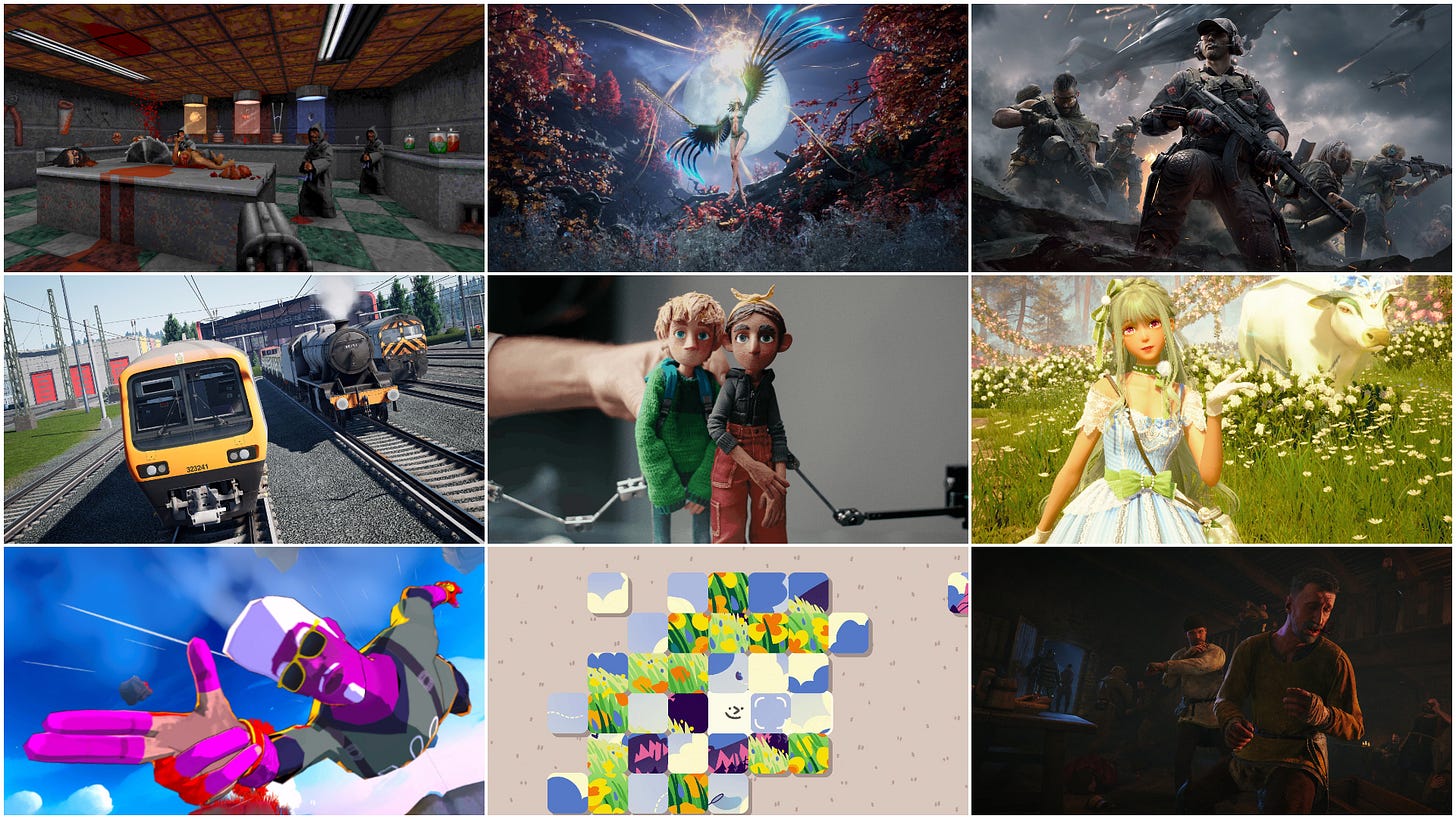
Read 2025’s best video game stories from Epic Games Store News

Sci-fi, dino-taming survival game ARK 2 eyes a 2028 release with a little or a lot of Vin Diesel